Get the breastfeeding help you deserve.
Book an insurance-covered in-home visit in San Diego, CA or virtual visit by a certified lactation consultant.


How it works
1
Click book now.
2
4
5
Select service and a time and date.
Check your email to set a password and complete intake.
3
Insurance approval takes 24 hours.
For at home: I charge a $25 travel fee.
Lactation Care should be affordable and accessible
That’s why it’s my mission to provide insurance-covered in-home lactation consultations in San Diego so you and your baby stay in the comfort of your own home.
-
I accept Aetna, United Healthcare, Blue Shield California, Cigna, and in process with Anthem BlueCross.
-
Yes! You can book a virtual visit with me from anywhere in the country. Booking is the same process and can be covered by insurance. If your insurance does not cover them, I offer out an of pocket rate of $150 per visit.
-
If your insurance is not accepted, I accept out of pocket pay and can provide you with a superbill for insurance reimbursement. Check with your insurance beforehand to confirm they accept superbills.
Home visits are $225. Virtual visits are $150.
-
Number of visits depends on your specific insurance policy. Insurances typically cover 6 visits. If you are still requiring lactation care after allotted visits, you can contact your insurance company. I also accept out of pocket pay for non-insured clients.
-
I am travel all over the San Diego, CA area for visits. This includes, La Jolla, Encinitas, Solana Beach, Del Mar, Chula Vista, Ocean Beach, Pacific Beach, Clairemont, Downtown San Diego, Hillcrest, North Park, La Mesa, Mission Valley and more.
For visits covered by insurance, I charge an out of pocket $25 travel fee.
-
Every feeding situation is different, so this completely depends on you, your baby, and how breastfeeding is going! Some only need one check in, and some need multiple sessions to reach our goals. It is up to you when and in what stage you would like to schedule your visits, or if you are not sure, we can form a plan together!
-
Visits are typically 1 hour in length. In a postpartum visit, this includes assessment of you and baby, initial weight, pre and post- feed weight, assessment of latching and positioning, and assessment of bottle feeding and pumping if applicable. We then go over a whole lot of breastfeeding education and form a feeding plan that is personalized to you and your baby. To see more details on other types of visits, see the above icons to learn more.
Here to answer any and all of your questions!
If this sounds like you, it’s time to book!
Why is breastfeeding painful?
Breastfeeding is not supposed to be painful. You are not supposed to have cracked, sore nipples. It is a complete myth that your nipples “just get used to it.” With a deep latch, you should be preventing nipple pain and damage. And by fully emptying the breast often, you are preventing clogged ducts and mastitis.
Why won’t my baby latch properly?
Getting a good latch is not easy and takes a lot of practice and getting to know your baby! First, it is important to get into a good position that is most supportive for newborns. Positions include cradle, cross-cradle, football, laid back, and side lying. Then you must ensure baby is latching on deeply. Some challenges to latching are out of your control, such as a tongue-tie, lip tie, and flat or inverted nipples. In some cases a nipple shield may help, or seeing your pediatrician to assess for a tongue-tie.
How do I know my baby is getting enough?
You know your baby is getting enough breastmilk if they are gaining adequate weight, peeing and pooping the minimum recommended amounts, and feeding them on demand. The only way to measure how much breastmilk your baby is transferring at the breast is by performing pre- and post-feed weights with a lactation consultant.
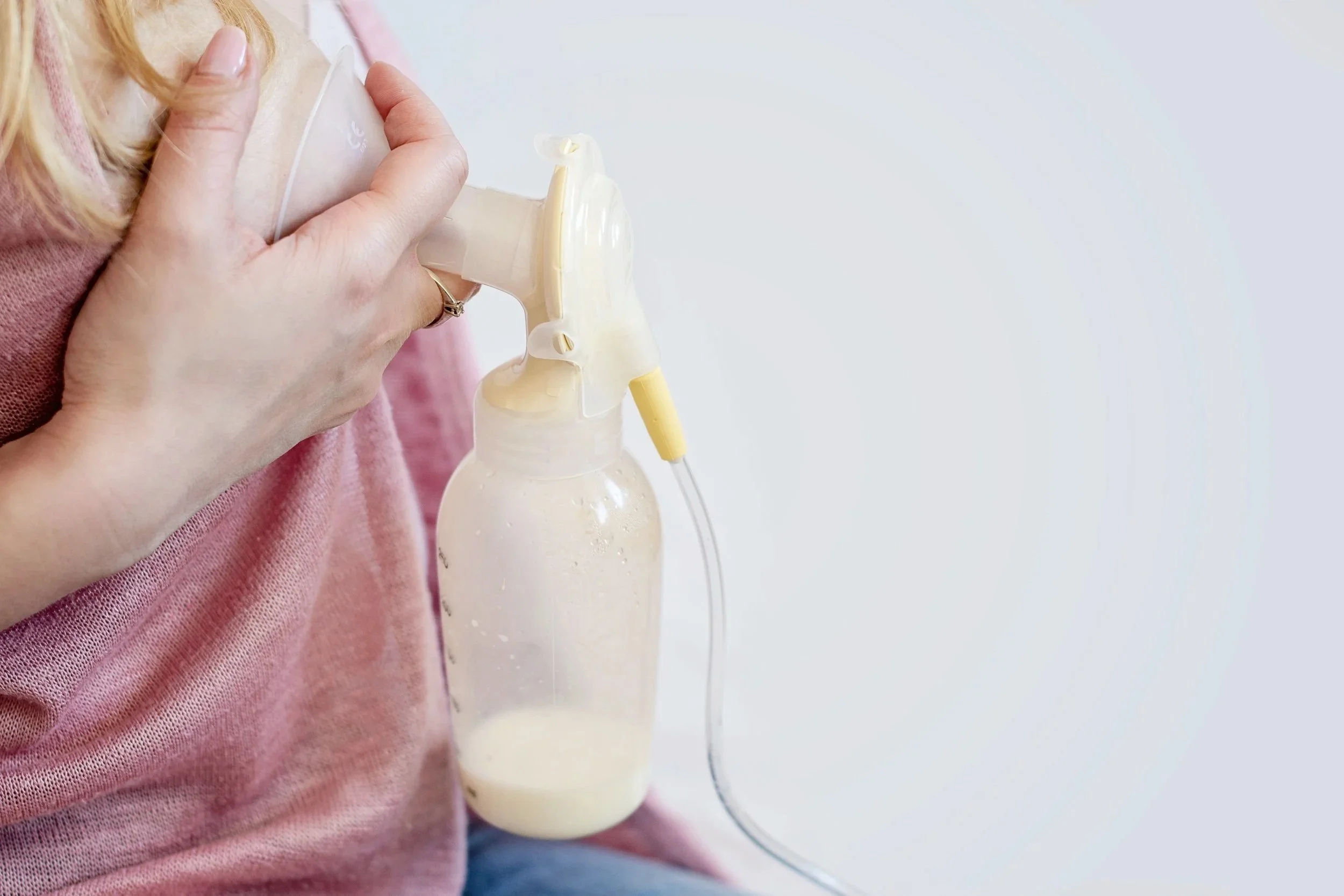
How do I start pumping milk?
If you want to start pumping and you are exclusively feeding breastmilk, it is best to wait until your milk supply has been well established and you are making just how much your baby needs. If you add in pumping too soon, you may start to cause an oversupply. If you are already supplementing your baby with formula or you have a low milk supply, pumping is recommended to help increase your milk supply and a feeding plan needs to be formed.
How do I increase my milk supply?
We first have to answer the question “Do I have low milk supply?” If you baby has adequate weight gain on breastmilk alone, you do not have low milk supply. There are many ways we can increase milk supply, by feeding more often and adding in pump sessions to empty the breast more frequently.
When should I see a lactation consultant?
It is never too early to reach out to a lactation consultant or lactation specialist. You can start prenatally, which is highly recommended if this is your first baby. Learning how to breastfeed comes with an overwhelming amount of information that is not absorbed in one sitting. Once your baby arrives, it’s great to do a lactation visit in the week that you get home from the hospital to check in. It is critical to contact a lactation consultant if any challenges or pain arises so that we can best help you continue breastfeeding.